Konya Eğitim Home

Category

Educational Innovation

21 articles

The Productive Pause: How Konya's Tradition of Unstructured Thinking Time Could Solve America's Student Creativity Crisis

The Productive Pause: How Konya's Tradition of Unstructured Thinking Time Could Solve America's Student Creativity Crisis

American classrooms have become relentlessly scheduled, leaving almost no room for the kind of idle, wandering thought that neuroscientists increasingly recognize as essential to creative problem-solving. Konya's educational tradition has long preserved deliberate periods of unguided reflection — and the research suggests this 'empty' time may be among the most cognitively productive investments a student can make.

Depth Over Speed: Why Konya's Cyclical Curriculum Model Produces What America's Semester System Cannot

Depth Over Speed: Why Konya's Cyclical Curriculum Model Produces What America's Semester System Cannot

America's credit-hour system moves students through subjects at a pace optimized for administrative convenience rather than genuine comprehension. Konya's educational tradition takes a fundamentally different approach — returning to core concepts across multiple years at increasing levels of depth — and the results challenge some of the most basic assumptions underlying American academic structure.

Before the Pen Touches Paper: How Konya's Storytelling Tradition Could Rescue American Writing

Before the Pen Touches Paper: How Konya's Storytelling Tradition Could Rescue American Writing

American students are struggling to write with authentic voice, and no amount of five-paragraph essay drilling seems to fix the problem. The oral narrative tradition deeply embedded in Konya's cultural and educational life offers a compelling alternative model — one where spoken discourse precedes and shapes written expression. This approach may hold the key to producing writers who actually have something to say.

Scrambled Syntax, Sharper Minds: The Neuroscience Case for Learning Turkish

When American students wrestle with Turkish's verb-final sentences and agglutinative word construction, something remarkable happens inside the brain. The productive confusion of learning a truly alien language structure may be one of the most powerful cognitive workouts available to modern learners. New research in educational neuroscience is beginning to explain why getting lost in translation is actually a direct path to academic resilience.

Beyond the Moment: How Turkish Verb Architecture Trains American Students to Think Across Time

Beyond the Moment: How Turkish Verb Architecture Trains American Students to Think Across Time

Turkish grammar does something remarkable that English largely cannot: it encodes the speaker's relationship to time and evidence directly into verb forms. For American students struggling with historical reasoning, scientific analysis, and long-term planning, learning these structures may offer one of the most unexpected cognitive upgrades available in any classroom.

Circle Up: How Konya's Ancient Peer Teaching Tradition Exposes the Lonely Flaw at the Heart of American Study Culture

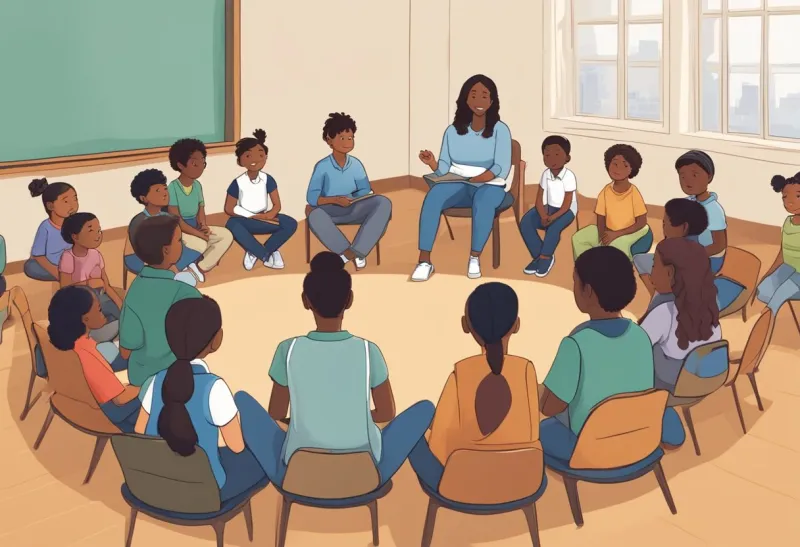
Circle Up: How Konya's Ancient Peer Teaching Tradition Exposes the Lonely Flaw at the Heart of American Study Culture

Deep within Konya's educational heritage lies a centuries-old practice called the halka — a communal study circle where students teach one another in rotating sessions that transform passive knowledge into lived understanding. Modern neuroscience is now confirming what Turkish scholars have long known: teaching your peers is one of the most powerful learning tools in existence. American students, largely conditioned to study alone, may be leaving their greatest academic asset untapped.

Wrong Answers, Right Lessons: How Konya's Mistake-Welcoming Classrooms Are Rewriting the Rules of Academic Growth

Wrong Answers, Right Lessons: How Konya's Mistake-Welcoming Classrooms Are Rewriting the Rules of Academic Growth

In Konya's classrooms, an incorrect answer is not a dead end — it is the beginning of genuine understanding. While American education culture frequently treats errors as evidence of failure, Turkish pedagogical tradition has long recognized that the struggle embedded within a mistake is where real learning lives. This article examines what US educators and students stand to gain by rethinking their relationship with being wrong.

Spaces That Teach: What Konya's Learning Environments Reveal About America's Distraction Crisis

Spaces That Teach: What Konya's Learning Environments Reveal About America's Distraction Crisis

The physical spaces where students learn matter far more than most American educators acknowledge. Traditional Konya educational environments have long understood that architecture, light, and silence are not incidental details but deliberate instruments of concentration. Examining these spatial principles offers American schools a compelling blueprint for reclaiming student focus in an age of relentless distraction.

Pen to Paper, Mind to Mastery: What Konya's Handwriting Culture Reveals About America's Digital Learning Gap

Pen to Paper, Mind to Mastery: What Konya's Handwriting Culture Reveals About America's Digital Learning Gap

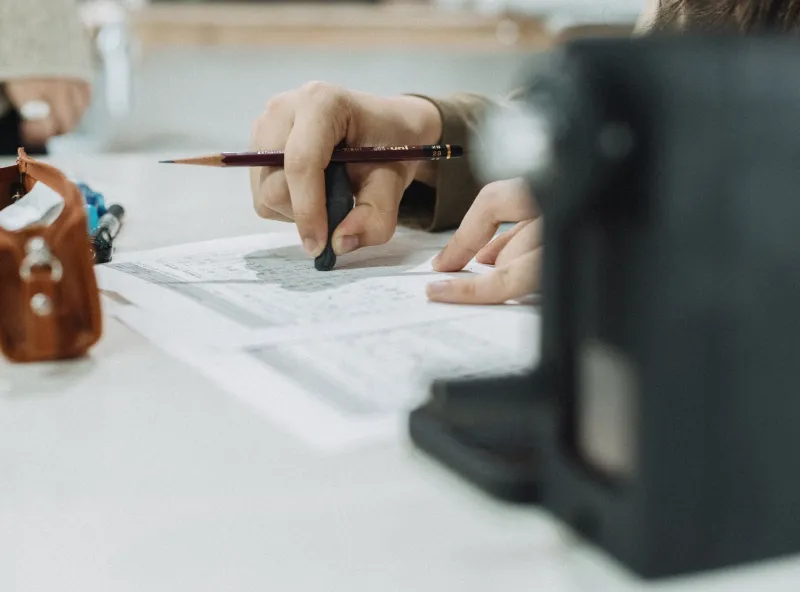
While American classrooms increasingly trade pencils for keyboards, students in Konya continue to develop their minds through the deliberate, tactile practice of handwritten learning. Neuroscience is beginning to confirm what Turkish educators have long understood: the act of writing by hand does something to the brain that typing simply cannot replicate. For American schools reconsidering their all-digital approach, Konya's experience offers a compelling and research-supported case for bringing

Slow Down to Say It Right: How Turkish Verb Complexity Is Training a New Generation of American Critical Thinkers

Slow Down to Say It Right: How Turkish Verb Complexity Is Training a New Generation of American Critical Thinkers

Turkish's demanding conjugation system forces speakers to encode nuance, evidence, and intention into every verb—long before a sentence is complete. American students who engage with this structure are discovering an unexpected cognitive reward: the discipline to think carefully before speaking. Here is what that means for argumentation, reasoning, and the future of American academic discourse.

When Difficulty Is the Lesson: How Konya's 'Zorluk' Philosophy Can Rescue American Students From the Comfort Trap

When Difficulty Is the Lesson: How Konya's 'Zorluk' Philosophy Can Rescue American Students From the Comfort Trap

In Konya's classrooms, difficulty is not an obstacle to be removed — it is the curriculum itself. Discover how the Turkish cultural principle of 'zorluk' reframes struggle as a vital pedagogical tool, and why American education's relentless pursuit of frictionless learning may be producing students who are less capable, less confident, and less prepared for the real world.

What American Schools Can Learn From Konya's Sacred Teacher-Student Bond

What American Schools Can Learn From Konya's Sacred Teacher-Student Bond

Across Konya's schools and learning circles, the relationship between educator and student is treated not as transactional but as transformational. As American teachers face mounting burnout and classrooms grow increasingly difficult to manage, a closer look at this relationship-centered model may offer a path forward that no discipline policy ever could.

Wired for Reasoning: What Turkish Grammar Can Teach American Students About Analytical Thinking

Wired for Reasoning: What Turkish Grammar Can Teach American Students About Analytical Thinking

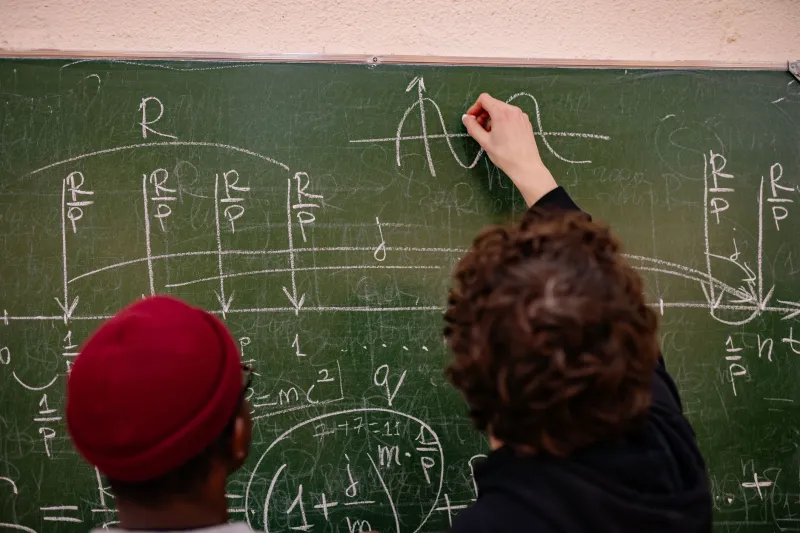
Turkish's agglutinative structure forces learners to build meaning layer by layer — a cognitive habit that mirrors the step-by-step logic demanded by mathematics and science. New research suggests that American students who engage with Turkish grammar develop measurably stronger problem-solving skills. Here is what the neuroscience tells us, and why it matters for classrooms across the country.

The Unexpected Academic Superpower: Why Studying Turkish Could Be the Smartest Move American Students Make

The Unexpected Academic Superpower: Why Studying Turkish Could Be the Smartest Move American Students Make

Emerging research in cognitive linguistics suggests that learning morphologically complex languages — Turkish chief among them — sharpens logical reasoning, pattern recognition, and analytical thinking in ways that transfer directly to academic performance. Educators in Konya and neuroscientists alike are making a compelling case for why American students should consider adding even basic Turkish study to their intellectual toolkit.

It Takes a Village to Raise a Scholar: The Case for Bringing Konya's Community-Centered Learning Into American Schools

It Takes a Village to Raise a Scholar: The Case for Bringing Konya's Community-Centered Learning Into American Schools

Konya's educational culture has long relied on a web of intergenerational relationships — grandparents, tradespeople, community elders, and parents — as active participants in a child's intellectual development. As American schools grapple with declining student engagement and widening achievement gaps, this collaborative model deserves serious attention. The evidence suggests that learning thrives when the classroom walls come down.

From Konya to the Classroom: How Turkish Pedagogical Traditions Are Reshaping American Education

From Konya to the Classroom: How Turkish Pedagogical Traditions Are Reshaping American Education

A growing number of American educators are looking beyond their own borders for fresh approaches to teaching, and many are finding unexpected inspiration in the schools of Konya, Turkey. From collaborative learning frameworks to the integration of cultural heritage into STEM curricula, Konya's educational traditions offer a compelling blueprint for change. This article examines what US classrooms stand to gain from these time-honored methods.